
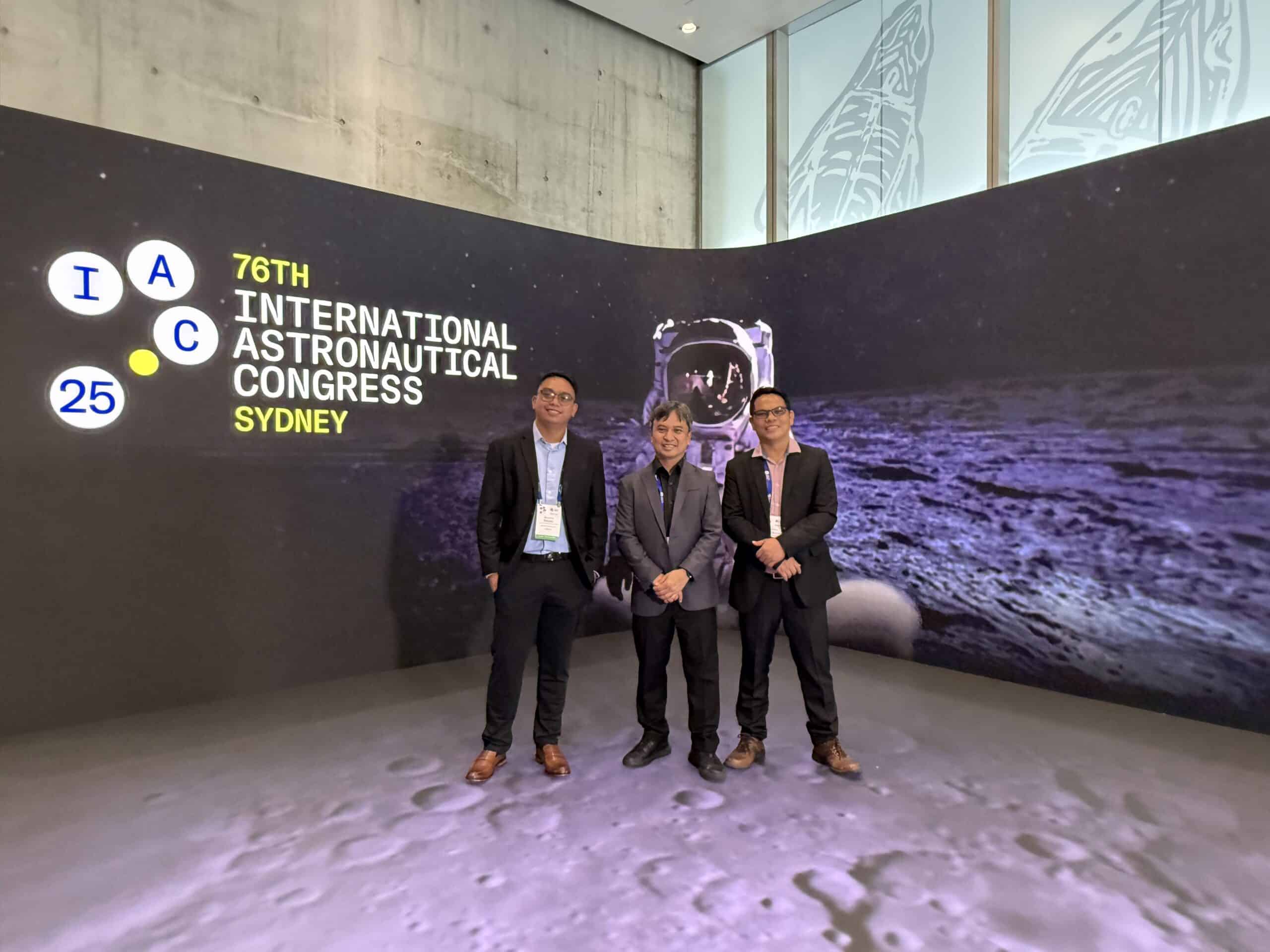
Indiana Aerospace University (IAU) proudly participated in the International Astronautical Congress 2025, held from 29 September to 3 October 2025 in Sydney, marking a major milestone in the university’s expanding engagement within the global space community. The congress gathered thousands of researchers, educators, engineers, policymakers, and industry leaders from around the world, providing a high-level platform for sharing research, meeting new people, exchanging ideas, and exploring emerging trends in space science, engineering, and education.
IAU’s participation in the International Astronautical Congress 2025 stands as a clear demonstration of the university’s commitment to advancing space education, research excellence, and national capacity building that brings global perspectives back to the Philippines and contributing meaningfully to the growth of the country’s space ecosystem.
A key highlight of IAU’s participation was the presentation of a research paper under the Space Education by Jeremy Bajado, entitled “Implementing Can Satellite and Rocket Competition to Bolster Space Education in the Philippines.” The paper presented the implementation and outcomes of the 1st Philippine Can Satellite Rocket Competition (PCSRC) 2025, an initiative pioneered by Indiana Aerospace University to address the need for structured, hands-on space systems education in the country.

The research highlighted how the competition integrates CanSat development, sounding rocket design, mission planning, launch operations, and post-flight analysis into a single experiential learning framework. It emphasized the role of project-based and competition-driven approaches in developing students’ technical skills, systems thinking, teamwork, and motivation, while aligning academic training with real-world aerospace and space engineering practices. The study demonstrated that initiatives such as PCSRC can serve as effective platforms for strengthening national space education and building future space professionals in emerging space nations like the Philippines.

IAU was represented at the congress by a three-member delegation composed of Dr. Harold E. Toring, IAU’s Chief Executive Officer, Johnny Destacamento, Department Head of Aviation and Engineering and Jeremy Bajado, Aerospace Engineering Research and Development Adviser. Their participation reflected IAU’s strong institutional support for international research engagement, faculty development, and global collaboration in aerospace and space-related fields.
In addition to the research presentation, the IAU delegation actively attended a wide range of technical and educational sessions covering rocket propulsion systems including liquid, solid, and hybrid engines, satellite design and development, space education strategies, and radio communication research. These sessions provided valuable insights into current research directions, technological advancements, and emerging innovations shaping the global space sector.
Equally important was the opportunity to engage with distinguished professionals from space agencies, universities, research institutions, and private aerospace companies. Through formal sessions and informal discussions, the delegation gained exposure to global best practices, current industry needs, and future directions in space systems and education, while also opening doors for potential academic and research collaborations.
The overall experience proved highly beneficial to Indiana Aerospace University. Participation in IAC 2025 enhanced IAU’s international visibility, strengthened the credibility of its space education initiatives, and ensured that its academic and research programs remain aligned with global standards and developments. The knowledge, networks, and insights gained from the congress are expected to directly contribute to the curriculum development, research activities, and future aerospace and space projects at IAU.
IAU’s participation in the International Astronautical Congress 2025 stands as a clear demonstration of the university’s commitment to advancing space education, research excellence, and national capacity building that brings global perspectives back to the Philippines and contributing meaningfully to the growth of the country’s space ecosystem.
Source CDN Life